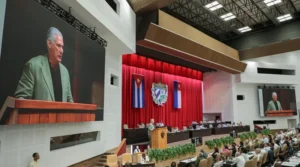
It is increasingly apparent that the question is no longer whether Havana understands what Washington wants. The question is whether Cuba’s system is willing—or even capable—of delivering it.
While the endgame remains uncertain, the Trump administration has placed sufficiently clear terms on the table: release all high-profile political prisoners, implement sweeping and verifiable economic reforms, commit to a property claims settlement process, allow Starlink internet access, and reduce security ties with U.S. adversaries. These demands fall short of the full democratic transition envisioned under Helms-Burton and, in theory, should be both doable and economically beneficial for Havana. In exchange, Cuba could seek sanctions relief and assistance for economic stabilization and recovery. After all, a deal means every side gets something they want.
Despite the occasional taunts of a “friendly takeover,” or sending in the U.S.S. Lincoln, Trump does not appear to be seeking regime change so much as regime movement: signs of life suggesting the Cuban state still retains the ability to get its house in order and work with the United States. If Cuba can deliver concrete concessions and reforms, it may convince Washington that the system retains some capacity to self-correct, stabilize, and integrate economically, rather than remain in permanent defiance.
If it cannot—whether due to ideological rigidity, internal fragmentation, or simple incompetence—the conclusion increasingly becomes that the system is incapable of governing effectively, even as the economy collapses and Cuba allegedly stockpiles hundreds of Iranian and Russian attack drones (a claim Havana has not denied).
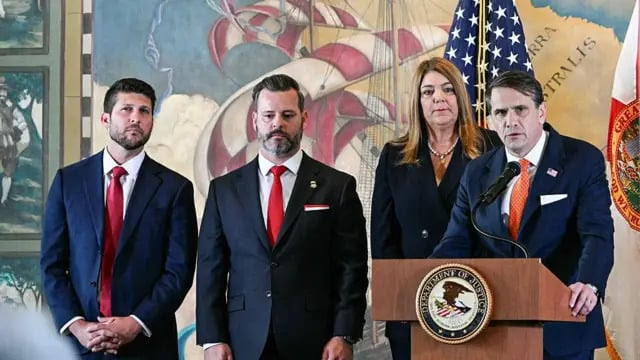
Cuban officials will argue that no government can negotiate under the current barrage of pressure from Washington. But even in the relatively calmer days of the Biden administration Havana demanded sanctions relief guarantees in exchange for political prisoner releases, and during the halcyon days of the Obama opening, it refused economic reforms that could have deepened normalization out of fear of losing control. This week’s indictment of Raúl Castro in Florida is unlikely to make any of this easier, but history has already shown Cuban leaders that the longer they defy gravity, the more painful the fall becomes.
The concern is that Cuban leaders are trapped in a straitjacket of their own making. As a U.S. official involved in talks with Havana told Politico last week, “The system is so calcified and consensus-based. They are living in another reality.” Cuba’s ruling elites lack both the self-awareness and the vertical integration within their own system necessary to understand what is now expected—not just of Cuba, but of any country seeking reintegration into the 21st-century global economy. They lack even more the institutional capacity to execute reforms consistently from the top down. Fidel’s revolutionary system was designed to manage an island fortress and panopticon, not a modern, globally integrated economy.
Every day these internal bottlenecks remain unresolved increases the risk of eventual U.S. military action, possibly even occupation—something there is strong reason to believe neither Trump, nor most Republicans on the Hill, actually want. The President still seems to prefer a Cuban government he can work with over one he concludes is beyond redemption.
As our executive director, Ricardo Herrero, told WLRN’s Tim Padgett this week, “the Cubans have always shown that they’re very good at running the clock.” With Trump raising expectations for some imminent breakthrough, including military action, that regime tactic is most likely “a mistake.”
We cover all this and more in this week’s newsletter.